CIVM

Center for in vivo Microscopy

 
  home | about us | staff| contact | Duke Med Center  


faq

imaging facilities


The Center for In Vivo Microscopy has a wide array of imaging systems, special animal facilities, visualization tools, and a computer network that all contribute to our world-class facility. Because small animal imaging is so specialized, our integrated team has the skills to design and in some cases, manufacture the equipment needed.

Magnetic resonance (MR) imaging systems

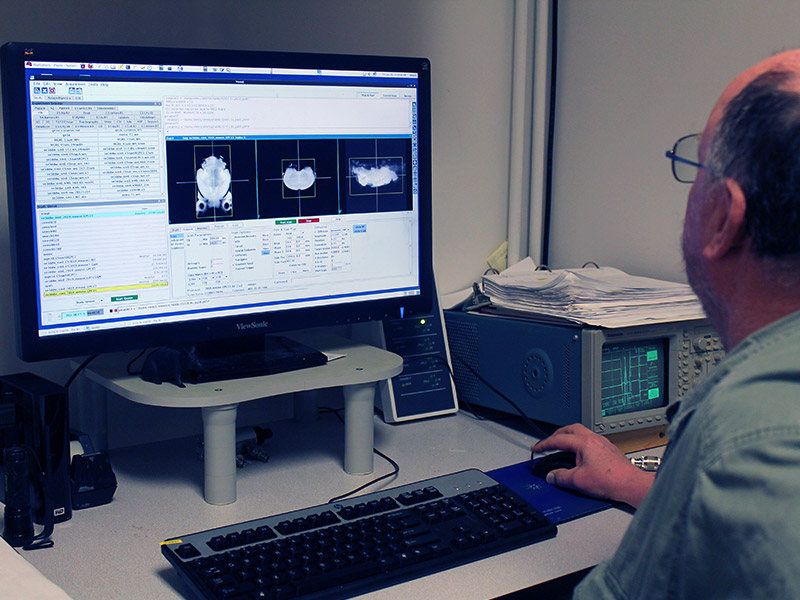
The MR imaging systems at the Center for In Vivo Microscopy are unique, using specially designed high-field magnets and gradients interfaced to state-of-the-art clinical imaging consoles.

2T medium bore
MR microscope
7T medium bore
MR microscope
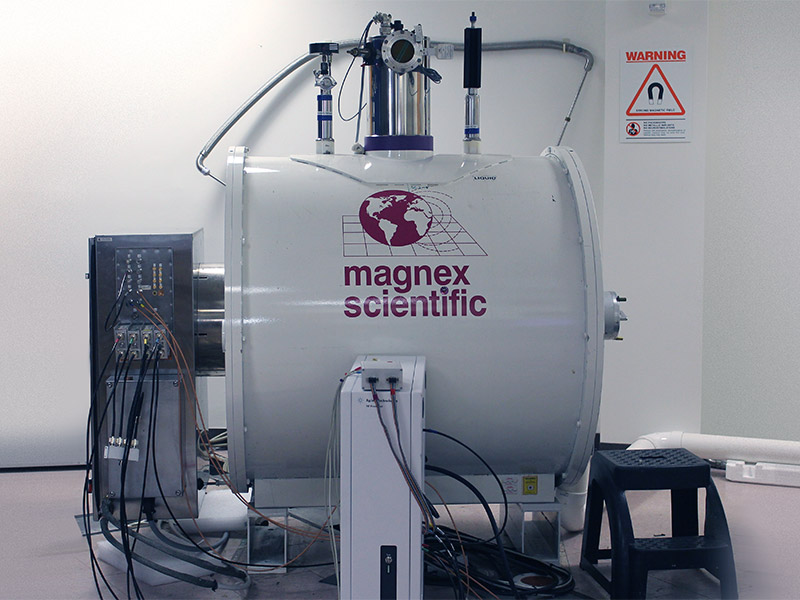
9.4T MR microscope
in vivo rat/mouse imaging and
hyperpolarized gas studies
in vivo rat/mouse cardiovascular
and neurologic imaging
small specimens, such as
mouse or rat brains


  • Oxford 30-cm horizontal bore magnet
  • GE EXCITE console
  • 2 sets of 18 Gauss/cm shielded gradients–15 cm clear bore provide very rapid switching at 180 mT/m over 150 mm field of view (FOV) and 400 mT/m over 120 mm FOV
  • Scan-synchronous ventilator system
  • 1 MHz receiver

  • Magnex 21-cm horizontal bore magnet
  • GE EXCITE console provides simultaneous excitation in 2 channels and reception in 8 channels at frequencies from 60–300 MHz
  • Uses include structural and functional phenotyping in the mouse, and MR histology
  • 2 sets of shielded gradients provide very rapid switching at 400 mT/m over 120 mm FOV and 770 mT/m over 90 mm FOV
    • Oxford 8.9 cm vertical bore magnet
    • GE EXCITE console
    • 2 sets of 95 Gauss/cm shielded gradients–5.4 cm clear bore
    • Resolution down to 10 microns

    Micro-CT / microX-ray

    This equipment can be configured for conventional x-ray or micro-CT. The micro-CT system is used for cardiopulmonary imaging in the mouse and Digital Subtraction Angiography (DSA).

    • Phillips x-ray system
    • Custom-made rotating platform
    • High-resolution CCD detector
    • Custom computerized control system
    • Custom-made synchronous ventilator

    System configured for DSA

    Micro-CT system and console area

    Custom-built ventilators

    Transport cart

    • Used during in-vivo imaging for controlled delivery of anesthetic, breathing, and hyperpolarized gas
    • LabVIEW-controlled breathing cycles for such things as breathing pattern, inspiration/expiration/held breath, breathing rate, tidal volume, switching between gases
    • We can transport an anesthetized animal with a portable small animal ventilator that can take animals from one imaging modality to another


    Views of transport cart and ventilator

    Ultrasound

    • Visualsonics Vevo 770 Ultrasound system operates at 40 MHz with spatial resolution down to 30 microns

    Biological support for specimen and live animal imaging

    Specimens:

    • Perfusion-fixation and staining involves micro-surgically inserting perfusion catheters into arteries/veins and pumping to flush and perfuse-fix the vascular system. The whole body specimen is then paced in a tube for imaging.

    In vivo imaging:

    • The animal is kept still with anesthesia, and we monitor animals closely with custom LabVIEW programs for real-time monitoring and control of heart rate, body temperature, blood gas, and carotid pressure.
    • Mechanical ventilation is available for each of our imaging systems.

    Polarizer for hyperpolarized gases

    • The stable, inert gas isotopes 3He and 129Xe, when hyperpolarized, emit an MRI signal nearly 1 million times stronger than what is attained in thermal equilibrium. This enhancement more than overcomes the low density of gases, allowing us to image the gases with exquisite resolution.
    • Hyperpolarized 3Helium is the most advanced of the hyperpolarized gases. Current efforts are directed towards ultra-high-resolution imaging of ventilation in asthmatic mice. An imaging session uses 10–100 ml of 3He for mice and 100-1000 ml for rats.
    • We also produce hyperpolarized 129Xenon, which is now a major part of our experiments on the 2T magnet. 129Xe can be imaged beyond the air spaces, including brain, liver, kidneys, and the vascular system.
    • Our hyperpolarized gas imaging effort is supported by precision delivery of the gases, specialized MRI pulse sequences and reconstruction algorithms, precision measurement of polarization, and other quality assurance tools, such as phantoms.


    Polarization system for production of 3He and 129Xe and polarization measurement system.

    Optical microscope and histological slide scanner

      Conventional microscopic examination of tissues is an important component of many of our studies. Bright field microscopy is used to confirm tumor vascular density as determined non-invasively by DSA or MR, and is used to confirm the severity of pulmonary injury in our MR and CT studies of fibrosis and emphysema.

    • Nikon Eclipse microscope fully equipped for bright field, phase contrast, and photo-microscopy
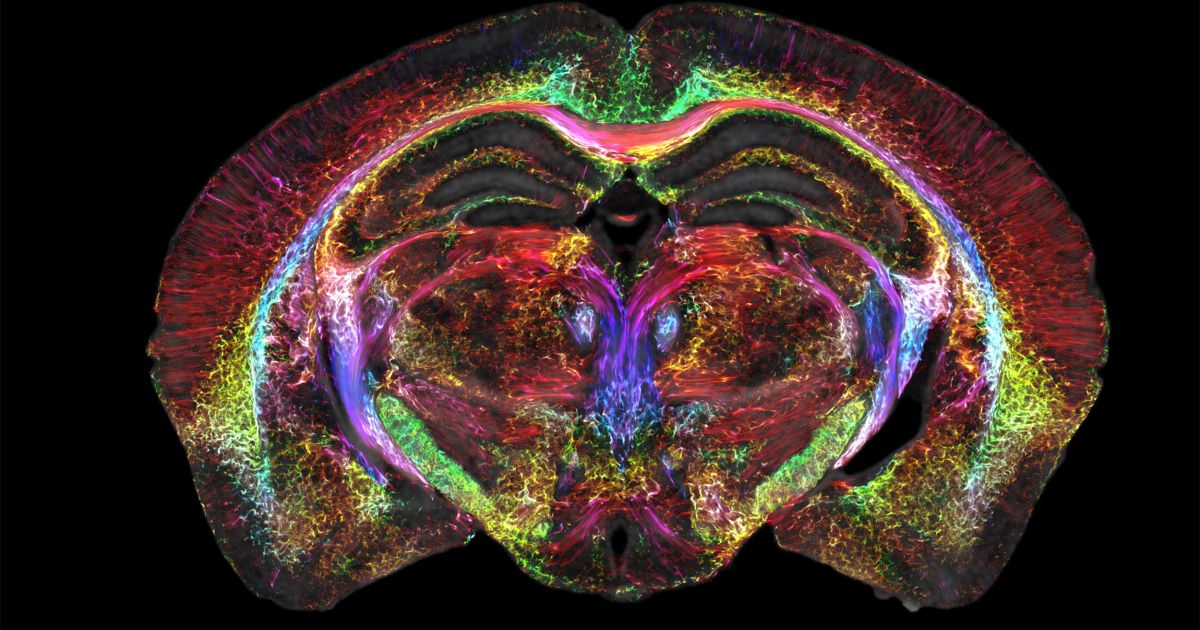
    • Histological slide scanner is able to image a complete section. This large field of view allows direct comparison, for example, to our MRM of the mouse whole brain.


    Nikon microscope with digital camera

    Histological slide scanner

    Computers / network / visualization tools

    Our extensive computer / networking facilities include:

    • SGI Origin, Octane, and O2 workstations, including 256 MB-to-4 GB of memory
    • SUN, Apple, and PC computers
    • Unique 3D reconstruction applications for FT and projection-encoded MR data
    • Veritas tape library
    • MATLAB facilities
    • HP spectrum analyser for RF coil development

    • Power Macintosh G5 workstations with 4GB or more of RAM for image rendering and analysis
    • Volocity 3.1 and VGStudio MAX 2.1 volume rendering, analysis, and animation software
    • VITREA medical image analysis workstation
    • multiple large RAID facilities providing TB storage for volume and derived data
    • Gigabit Ethernet infrastructure for data transfer among workstations, recon engines, and archives

    Coil lithography / etching
    • professional photo-resist lamination of microwave substrate
    • customized CAD/CAM software for translation of coil pattterns to masks
    • high-intensity photo-resist exposure
    • substrate etching to 25x25 cm plates

    T-tech mill for high-aspect finger coils
    • for construction of coils operating at high frequencies over small volumes (example, 30 mm of a mouse)
    • many (64-128) very small coil elements result in higher B1 homogeneity, reduced stray capacitance, and higher sensitivity
    • mill allows machining of thicker Cu foil substrates
    • 1-mil precision
    • locally produced software for translation of coil patterns to milling tool paths


      ---